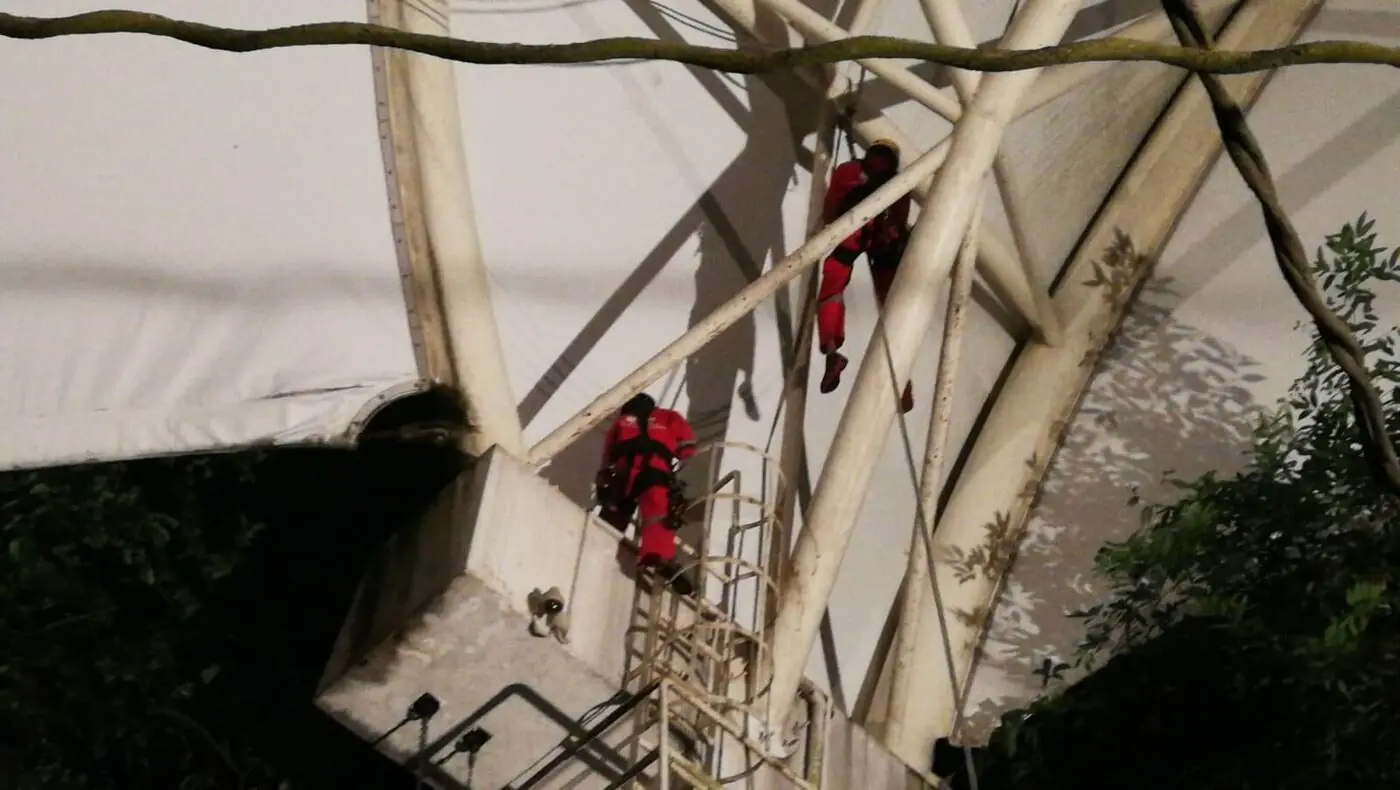
Rope Access Support
Industrial rope access for façade, inspection and high-level repair work where scaffolding or lifts are impractical.
Read serviceChoose language
Choose language
We plan and execute height-access works across rope access, boomlift and scissor lift operations, façade maintenance and high-level cleaning — under written method statements and rescue plans.
Rope access and boomlift/scissor lift access are two ways to reach a high or awkward work zone. We choose the right method for the building and the job — not the other way around.
Industrial rope access for façade, inspection and high-level repair work where scaffolding or lifts are impractical.
Read service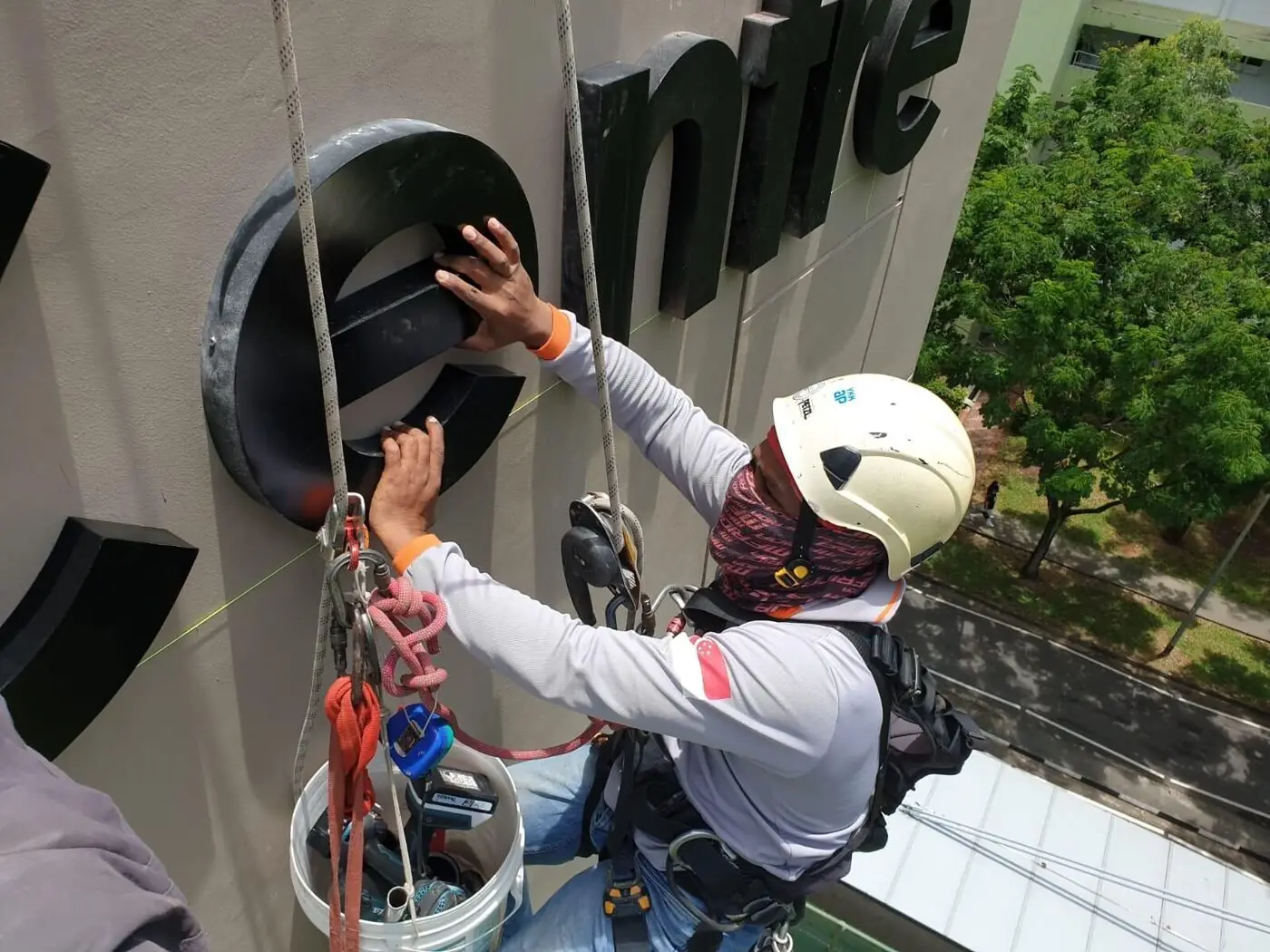
Mobile elevating work platform (MEWP) access for façade, ceiling, signage and external maintenance — articulated boomlifts, telescopic booms and scissor lifts.
Read service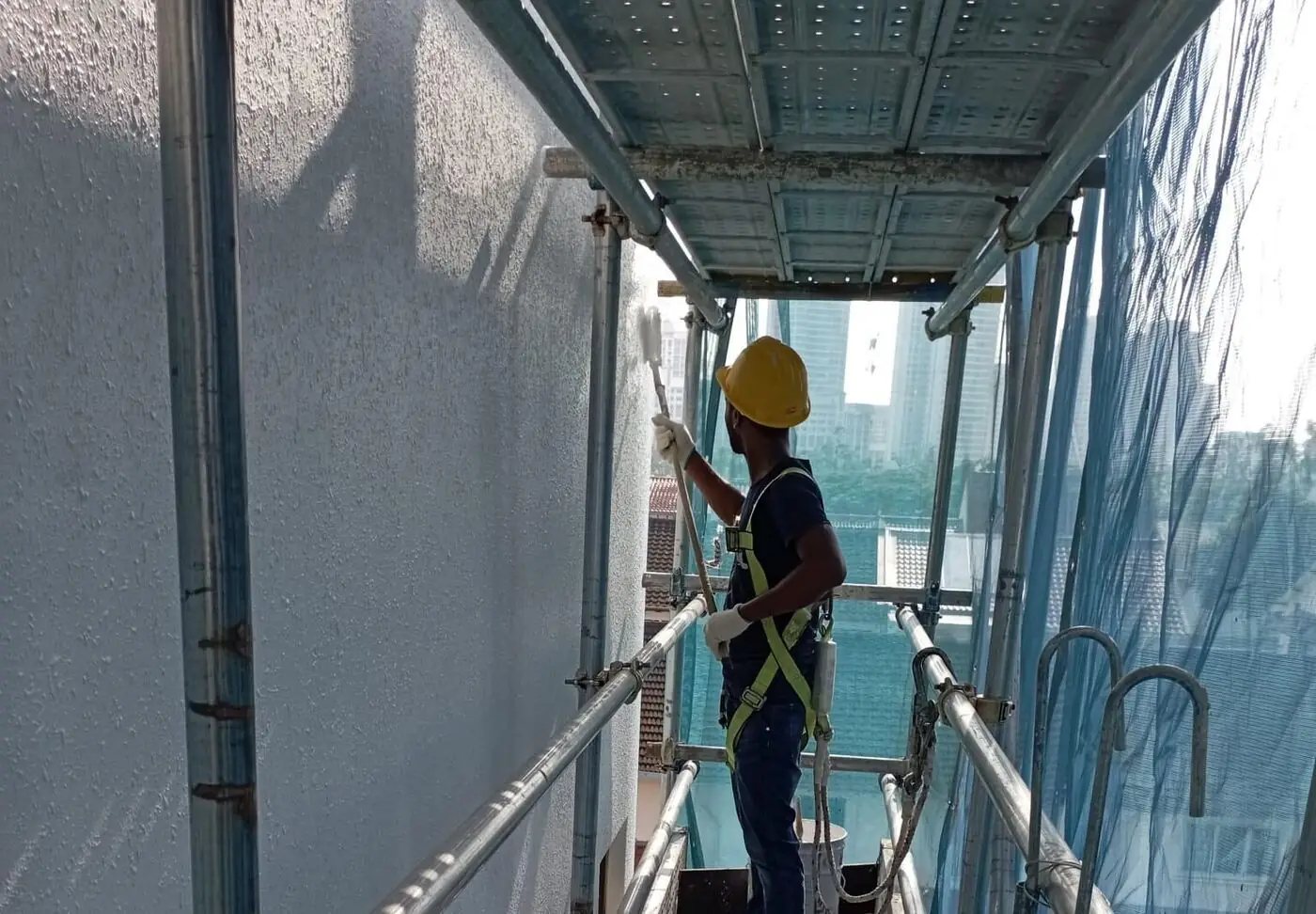
Inspection, cleaning, sealant replacement and high-level repair support across cladding, curtain wall and painted façades.
Read service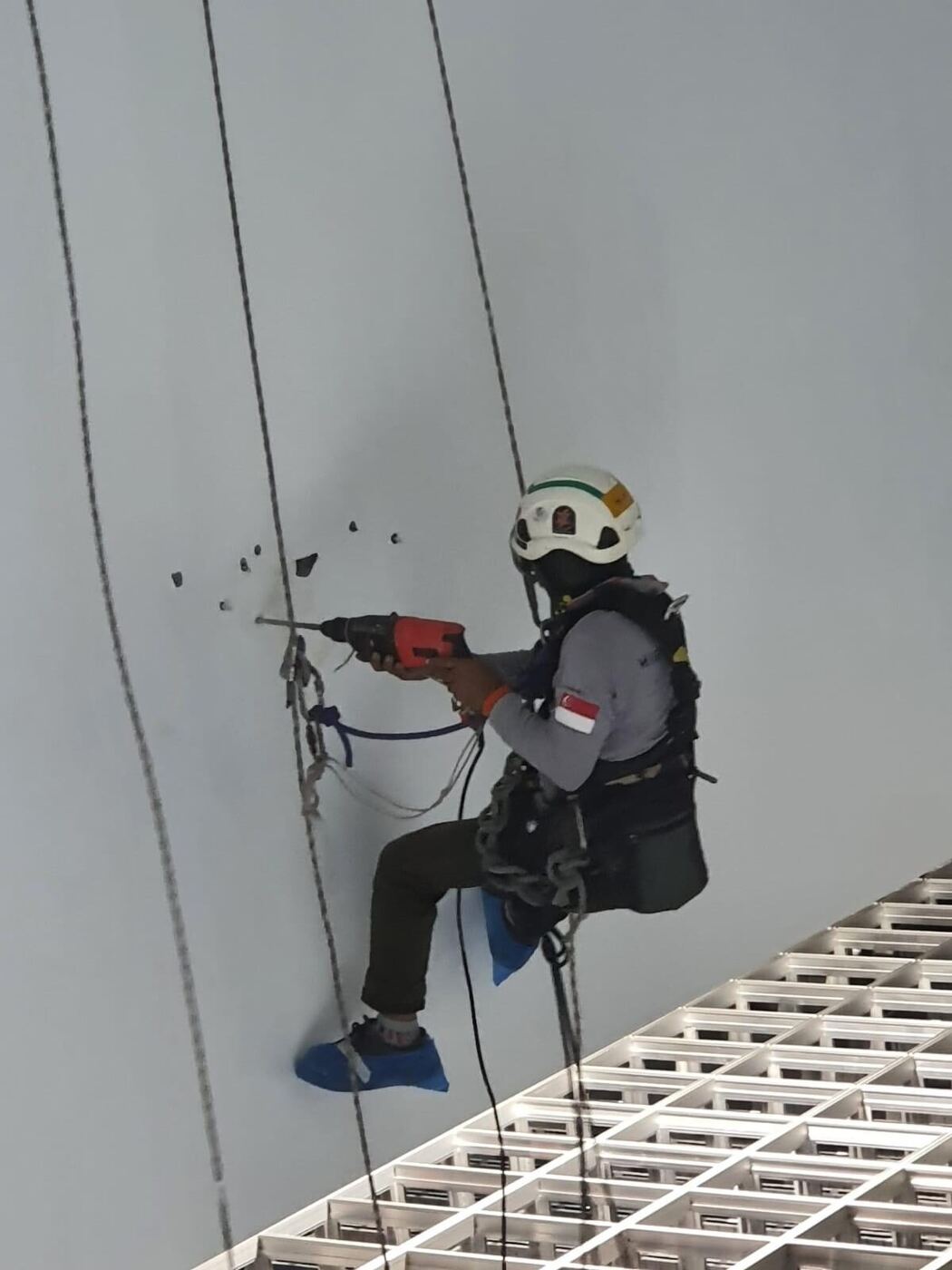
Roof access planning, cat ladder route review and roof-edge protection support for maintenance, solar and antenna work.
Read service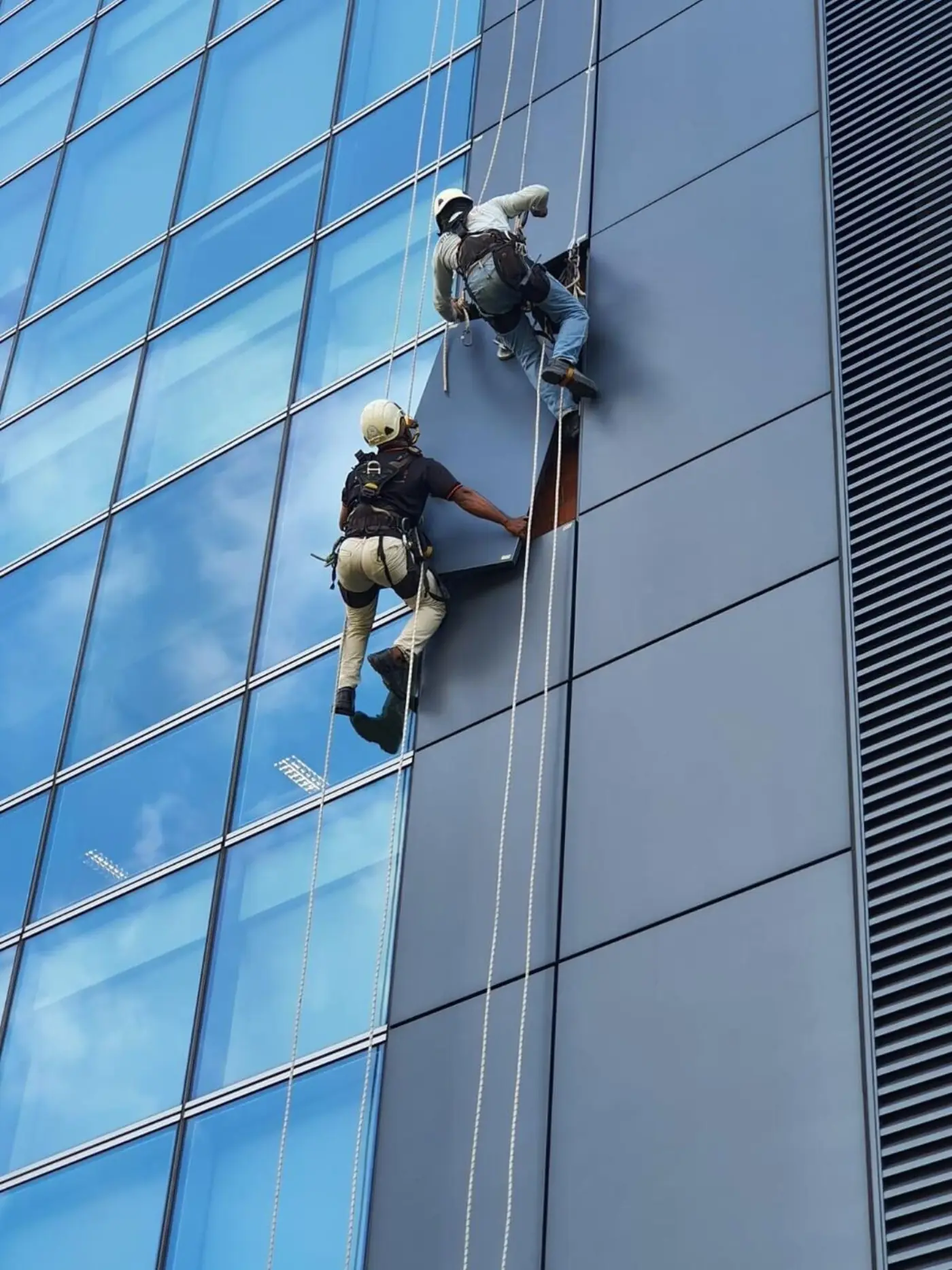
Risk assessment, method statement, toolbox and rescue planning support for work-at-height jobs.
Read serviceEvery job is shaped by the building and the surrounding activity. Below is the sequence we run before a technician leaves the ground.
Walk-through with the building or contractor. Anchorage, access, exclusion zones and weather constraints are noted.
Written risk assessment and method statement covering access, PPE, tool tethering and stop-work thresholds.
Permit-to-work coordinated with the building. Daily toolbox briefing signed off by every technician.
Primary and secondary rescue plans documented and equipment pre-rigged where the geometry allows.
Rope access is excellent for slim, awkward or busy façades, for short-duration inspection and repair, and for buildings where ground access for a lift is limited. It minimises set-up time and ground disruption when it is the right choice for the job.
For wider work fronts, ground-accessible elevations, indoor ceiling work or bulky material handling, a scissor or boom lift is often the safer and more efficient option. Our role is to recommend the right access method for the site.
Periodic façade inspection, cleaning campaigns, sealant and minor repair work across residential and mixed-use blocks.
Planned and reactive high-level maintenance. Signage, lighting and HVAC component access support.
Access subcontract support for façade trades — rope access, boomlift access, or both — on construction and retrofit projects.
High-rise residential and condominium blocks, commercial offices, hotels, hospitals, schools, malls, industrial sites and infrastructure projects. Sectors and property types include:
HDB blocks, condominiums, landed homes and mixed-use podium-tower buildings — periodic façade inspection, glass cleaning, sealant repair and re-painting access.
Offices, malls, hotels, hospitals and schools — high-rise glass cleaning, signage and banner installation, sealant and crack repair, structural maintenance access.
Factories, warehouses, shipyards and infrastructure assets — inspection, pipework access, ceiling and electrical maintenance, roof access and cat ladder support.
Send the building, scope and timeline. We will come back with the right access method, a price range and a draft method statement.